ALMS 2026 Annual Conference
October 1–2, 2026
Heritage Hall Building, Macdonald Hall, SAIT, Calgary, Alberta

Each year, the Alberta Lake Management Society (ALMS) hosts a two-day conference that brings together lake stewards, scientists, environmental professionals, community leaders, and other partners to share knowledge and discuss issues related to lake monitoring and management. In 2026, the ALMS Annual Conference comes to SAIT in Calgary, Alberta.
What to Expect
- Engaging presentations on cyanobacterial harmful algal blooms, lake isotopes, aquatic invasive species, proliferative kidney disease, drought, urban stormwater ponds, and more.
- Special presentations from Dr. Fred Wrona and Dr. Irena Creed.
- Tours of local sites of interest.
- Opportunities to connect with lake stewards, scientists, environmental professionals, and community leaders from across Alberta.
Registration
Registration for the 2026 ALMS Annual Conference is now closed.
Conference Agenda
View the conference agenda.
Accommodations
The conference room block has now been released. Attendees may contact Aloft Calgary University directly to inquire whether the conference rate of $139 per night is still available.
Parking and Getting to the Conference
The most accessible parking for the conference is available in Lot P6. View the SAIT conference location and P6 parking map (PDF) for directions.
You can park for free on campus by scanning the following QR code when you exit the parkade.
Frequently Asked Questions
What should I wear?
Please dress as comfortably and casually as you like.
Are meals included with my registration?
Yes. Your registration includes the scheduled meals on both conference days. Please see the conference agenda for details. A banquet dinner is not provided.
Do I need to bring my Eventbrite registration?
No. We will have a list of registered attendees at the conference.
Will presentations be made available online?
Yes! We will try to post all presentations following the conference.



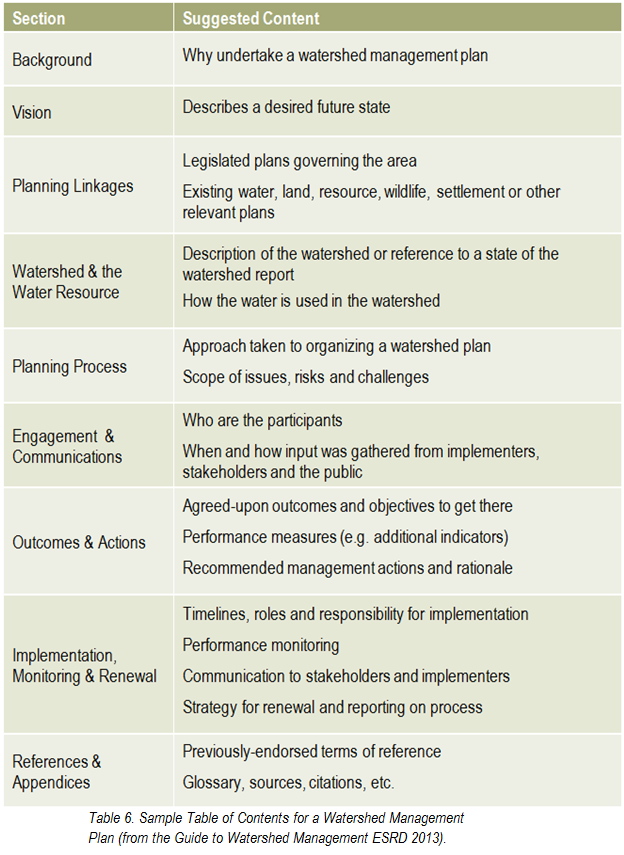
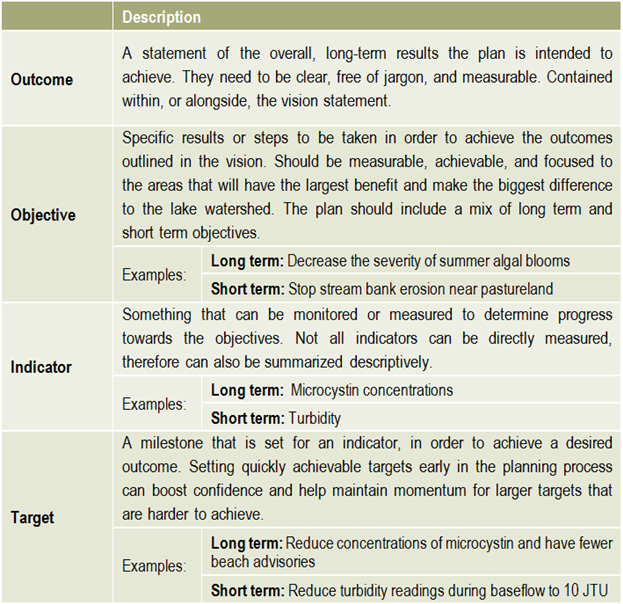
 What has the monitoring results of the plan and of the indicators shown? Is there a need to modify the plan? It is important that the lake watershed management plan does not just sit on a shelf. Information gaps should be addressed, action items need to be managed, completed, and evaluated to best address the needs of the lake. Always keep in mind the vision: if the actions taken are not bringing the lake closer to that vision, then the plan needs to be modified. Consider updating both the state of the watershed and the lake watershed management plans at regular intervals to make sure that the actions taken were achieving the desired outcomes and to evaluate what work still needs to be done.
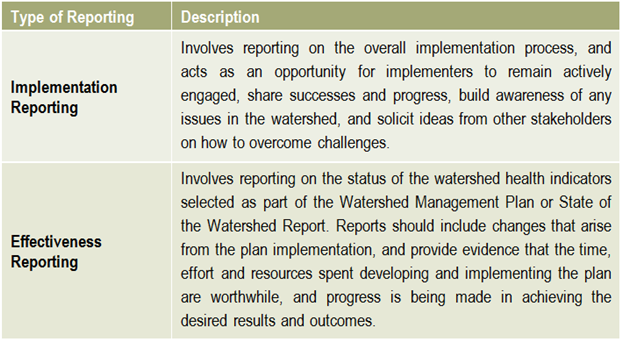 Reporting is an essential component of any watershed management planning and implementation process. There are two main types of reporting that should be shared with stakeholders on a regular basis: implementation reporting & effectiveness reporting.
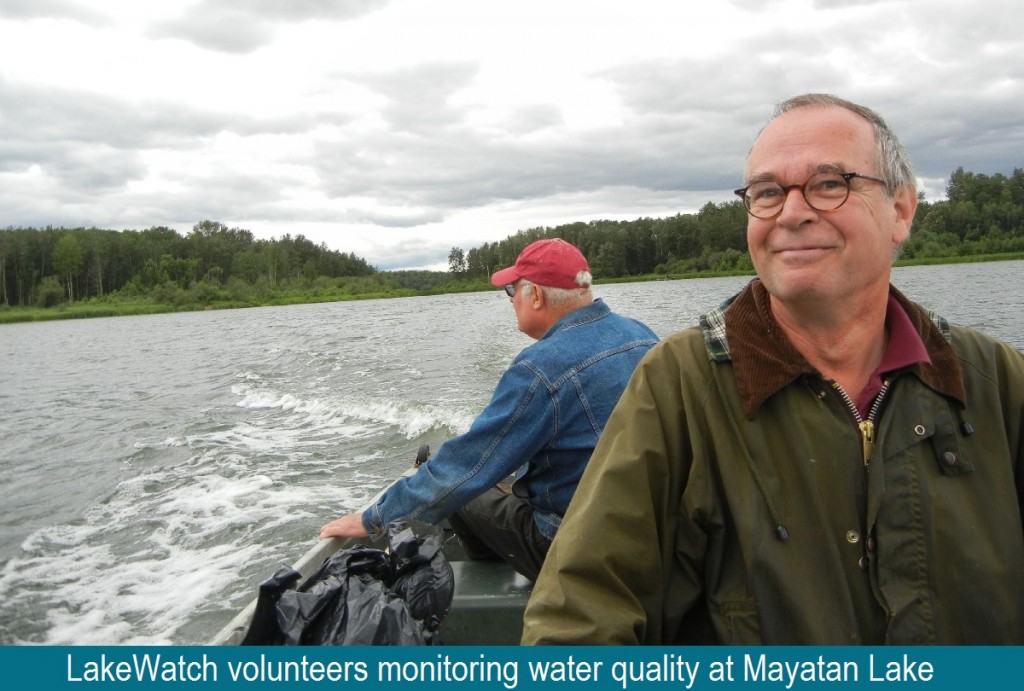 The development of a lake watershed management plan provides the guidance needed to implement activities, but the plan cannot be static. Monitoring the performance of your management actions is essential to understanding whether your goals have been met, and whether further actions are needed. Monitoring and evaluating the implementation and effectiveness of a lake watershed management plan allows assessment of progress towards the goals and objectives of the plan, identification of problems and opportunities, and a collection of critical information required when performing a 5 or 10 year review of the plan.
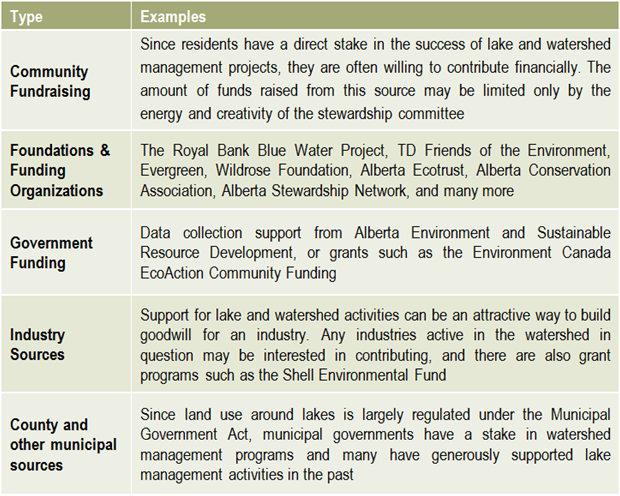 Once a plan has been approved by all affected sectors and officially endorsed and released by the steering committee, then implementation can begin in full. Action projects can be large and comprehensive, or made smaller by staging projects over time or into modules that can be tackled one at a time. Fundraising is an issue that many community groups may find intimidating, but experience with programs such as the Pine Lake Restoration Program (see
 The members of the steering committee will continue to play a strong role in facilitating and tracking implementation actions. This includes any actions they were responsible for, as well as tracking other committees and sector’s actions and progress made towards achieving the plan’s outcomes. Ongoing communication is essential to successful implementation and achieving outcomes, therefore a regular reporting mechanism could be set up in order to provide regular evaluation of the plan.
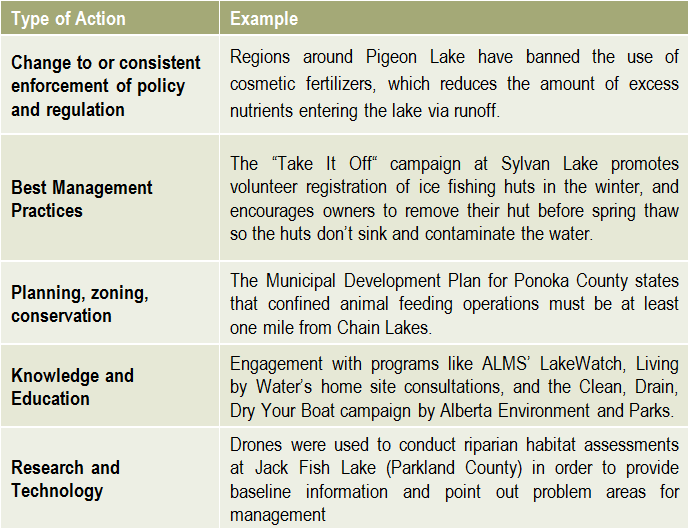 There is no limit to the number or types of lake management actions, but they typically fall into the categories on the right.

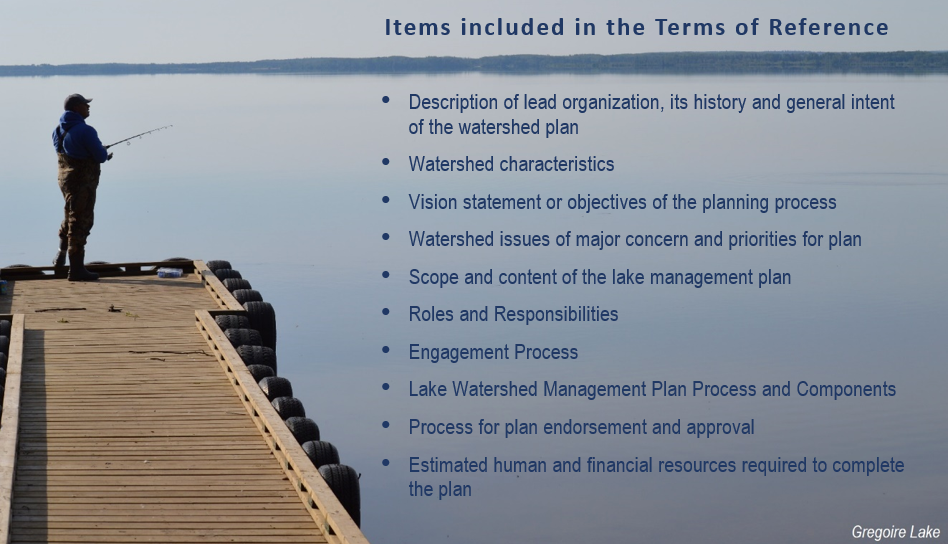

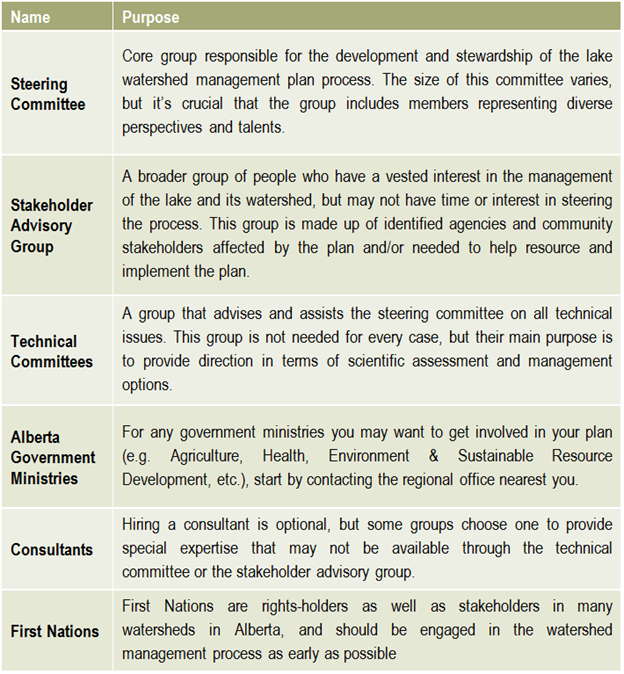
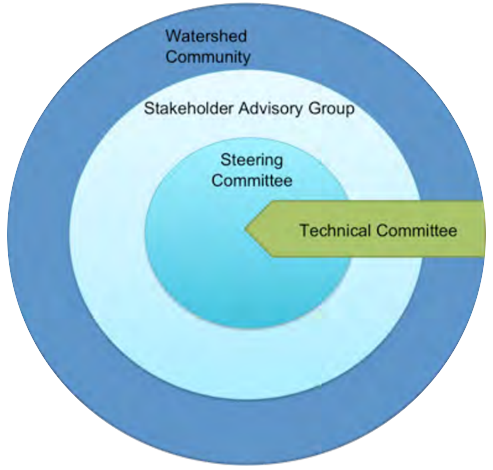 This graphic describes how the various committees and groups will work and interact together. The circle size depicts the approximate number of people involved, and the circles overlapping indicates that some individuals may reside in all of the circles and participate in multiple committees as part of the planning process. The technical committee is shown as an arrow, indicating that it is independent and has relatively few people, and yet it interacts with all of the groups. This graphic may look different depending on the lake and the people involved, and a detailed structure should be agreed upon and described in the plan’s Terms of Reference (Step 6).
 Helpful resources