

What is LakeWatch?
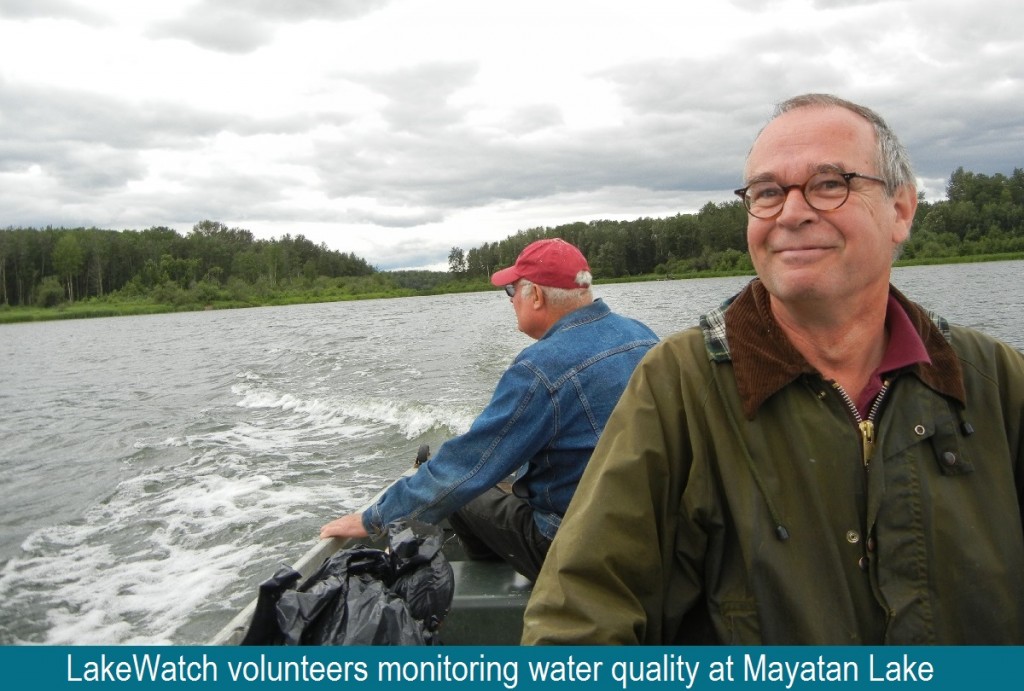
LakeWatch is a volunteer-based water quality monitoring program offered to Albertans who are interested in collecting information about their local lake or reservoir.
ALMS technicians assist volunteers to test the lakes 4 times during the summer, collecting important data such as water temperature, clarity, a suite of water chemistry parameters, invasive species, and other biological targets. Once all of the data is collected we produce a LakeWatch Report for the lake which summarizes the data in an easy-to-understand manner. LakeWatch Reports can be used to educate lake users and guide water restoration and management efforts. If you are interested in having your lake monitored as part of the LakeWatch program, please contact programs@alms.ca
Wondering what is involved in volunteering? Check out our LakeWatch Volunteer page!
What is LakeWatch Data Used For?
Water quality data is an important part of understanding or managing your lake ecosystem. Data collected by ALMS through the LakeWatch program can be useful in answering the question: “What is the ecological health of my lake as a whole?”, or “How is the health of my lake changing?”. As such, parameters collected by ALMS reflect some of the most important lake water quality variables: clarity, oxygen, temperature, nutrients, metals, cyanobacteria toxins, chlorophyll-a, zebra and quagga mussels, and more. Our stakeholders will find ALMS’ data useful for:
-
- Getting curious about your lake ecosystem!
- Developing nutrient guidelines for your lake.
- Establishing ecological benchmarks before negative impacts occur at your lake.
- Assessing the effectiveness of your management efforts.
- Producing State of the Watershed Reports.
At the end of each season, data collected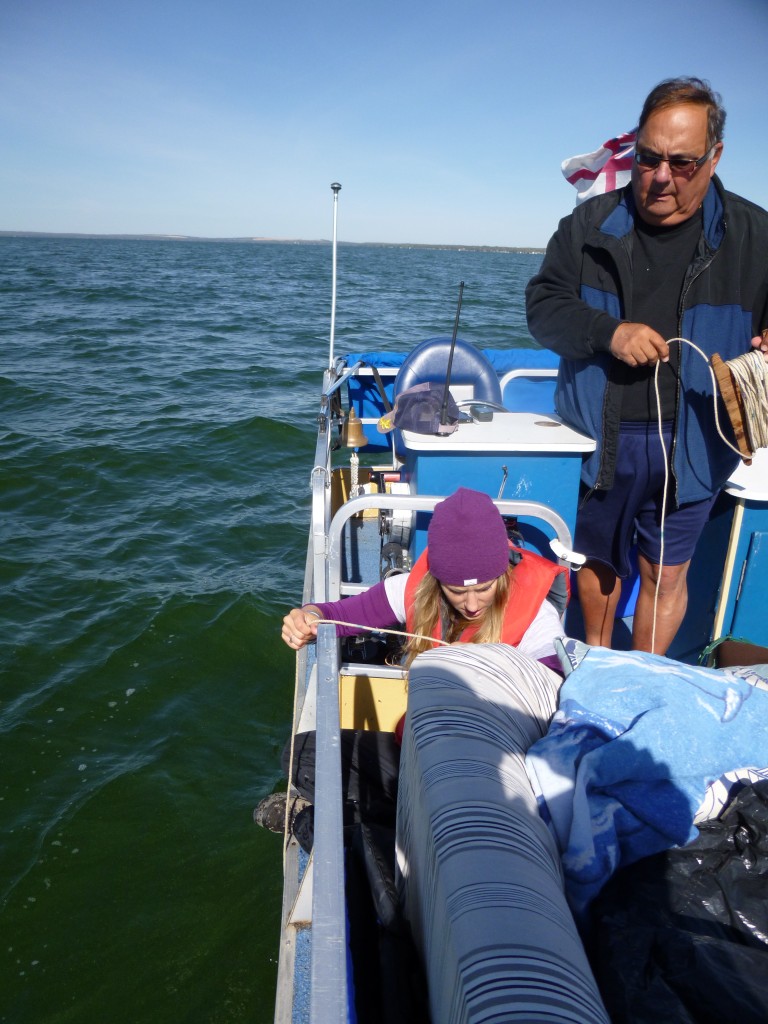 through the LakeWatch program is uploaded into the Provincial Government’s water quality database. Once there, ALMS data becomes available for use by the public, resource managers, and academia. In order to ensure our stakeholders understand their lake data, ALMS compiles annual LakeWatch Reports. These reports summarize data in an easy-to-understand manner and are available free of charge online.
Understanding your lake’s historical water quality can be difficult in the absence of historical water quality data. Even with historical data, a robust data set is often required to establish statistical significance. For lakes with enough historical data, ALMS has undertaken Trend Analysis for Secchi depth (water clarity), total phosphorus, chlorophyll-a, and total dissolved solids, to investigate how those parameters have changed over time. Also consider supplementing LakeWatch data and Trend Analysis with local or traditional knowledge, or using modern scientific techniques, such as paleolimnology and satellite imagery, to better understand your lake’s history.
Which Lakes are Sampled? What Lakes have been Sampled?
Each year ALMS takes requests to have your lake sampled. Requests are prioritized based on the amount of historical data available for that lake, volunteer availability, and urgency. After sorting through the requests, we will select: 10 lakes which meet our priorities (Base Lakes), 6-10 lakes in the Lakeland Industry and Community Association boundaries pending funding (LICA Lakes), 5 Provincial Park Lakes, and any additional lakes that are sampled on contract for an additional fee. If you are interested in having your lake monitored under the LakeWatch program, please contact us at programs@alms.ca.
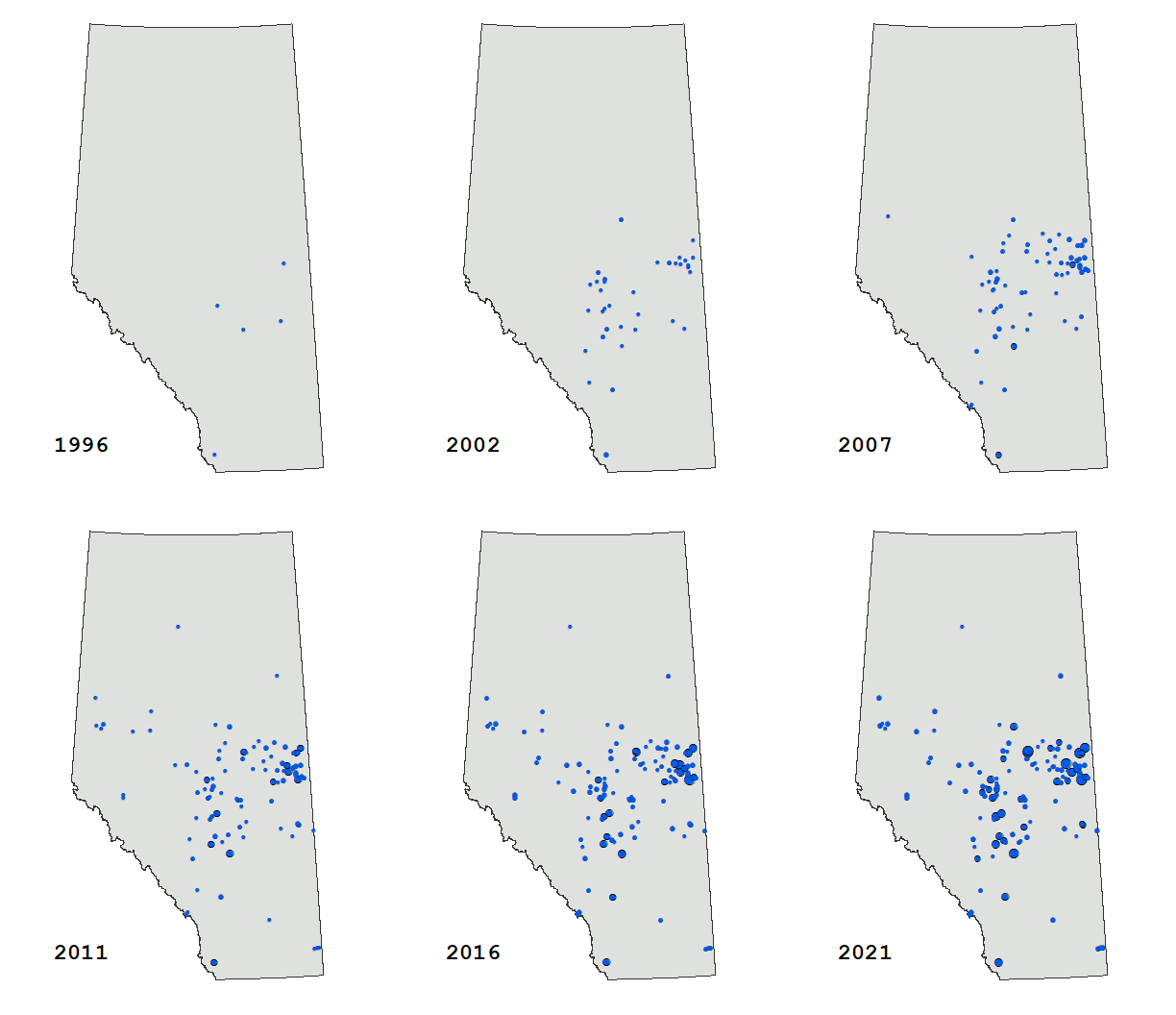
LakeWatch has been a highly successful program, collecting rigorous water quality data since 1996. In total, the program has monitored water quality at over 125 unique lakes across Alberta, some over multiple years, for a total of over 500 annual monitoring records. The animation below gives you a sense of the spread of lakes monitored by LakeWatch. Dots on the map represent lakes sampled by the program, while the size of dot represents the number of times a lake has been sampled.
View our Complete List of Lakes Sampled, since 2021.
Kirsten Letendre, LakeWatch Technician
 Kirsten’s passion for lakes started as a young girl spending her winters on McLeod Lake, ice fishing, and her summers on Pigeon Lake, camping, fishing and doing water sports. Her childhood passions continued into adulthood, and you can typically find Kirsten outside, near some body of water. She graduated from Grant MacEwan University in 2022 with a B.Sc., majoring in Biological Sciences. She has spent time working in a biology lab, working with orphaned and injured wildlife, and working on a fish monitoring study, looking at the health of fish in lakes across Alberta. Kirsten started with ALMS in fall 2022 to support their winter programs and is now looking forward to exploring the province and learning more about Alberta’s amazing aquatic ecosystems as a LakeWatch Technician this summer.
Maddie Koning, LakeWatch Technician
 Maddie has always enjoyed recreating on Alberta’s lakes. Her favourite outdoor activities include hiking, swimming, paddleboarding, and cycling. Her enjoyment of Alberta’s natural systems and lakes has grown into a passion for conservation and sustainability. Maddie graduated from The King’s University in 2023 with a bachelor’s degree in Environmental Studies, with a concentration in Social Sciences. Her coursework involved learning and researching the social dimensions of resource management. Maddie looks forward to learning more about Alberta’s aquatic ecosystems, and connecting with passionate Lakewatch volunteers.

 The members of the steering committee will continue to play a strong role in facilitating and tracking implementation actions. This includes any actions they were responsible for, as well as tracking other committees and sector’s actions and progress made towards achieving the plan’s outcomes. Ongoing communication is essential to successful implementation and achieving outcomes, therefore a regular reporting mechanism could be set up in order to provide regular evaluation of the plan.
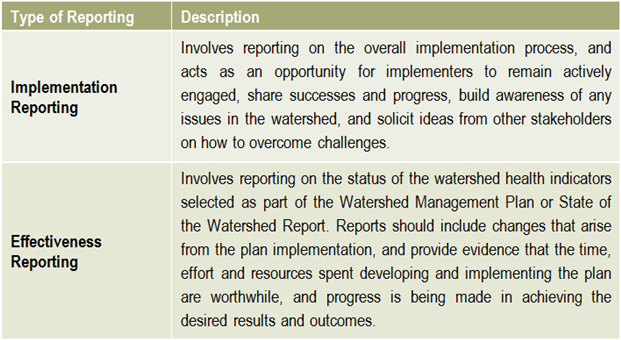 Reporting is an essential component of any watershed management planning and implementation process. There are two main types of reporting that should be shared with stakeholders on a regular basis: implementation reporting & effectiveness reporting.
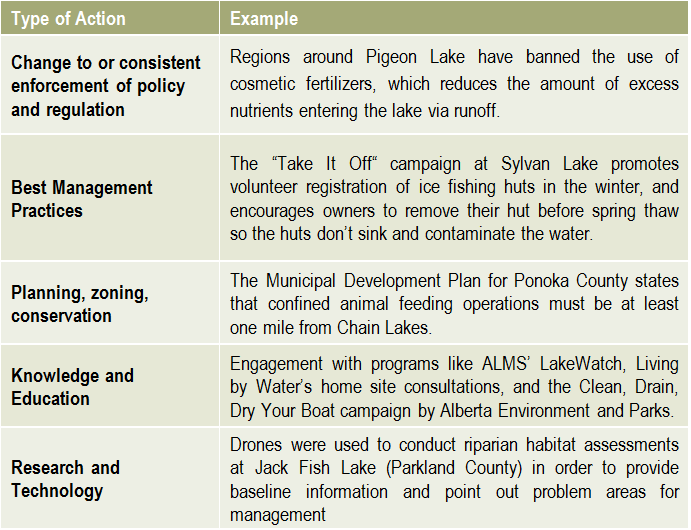 There is no limit to the number or types of lake management actions, but they typically fall into the categories on the right.
 Helpful resources
 The development of a lake watershed management plan provides the guidance needed to implement activities, but the plan cannot be static. Monitoring the performance of your management actions is essential to understanding whether your goals have been met, and whether further actions are needed. Monitoring and evaluating the implementation and effectiveness of a lake watershed management plan allows assessment of progress towards the goals and objectives of the plan, identification of problems and opportunities, and a collection of critical information required when performing a 5 or 10 year review of the plan.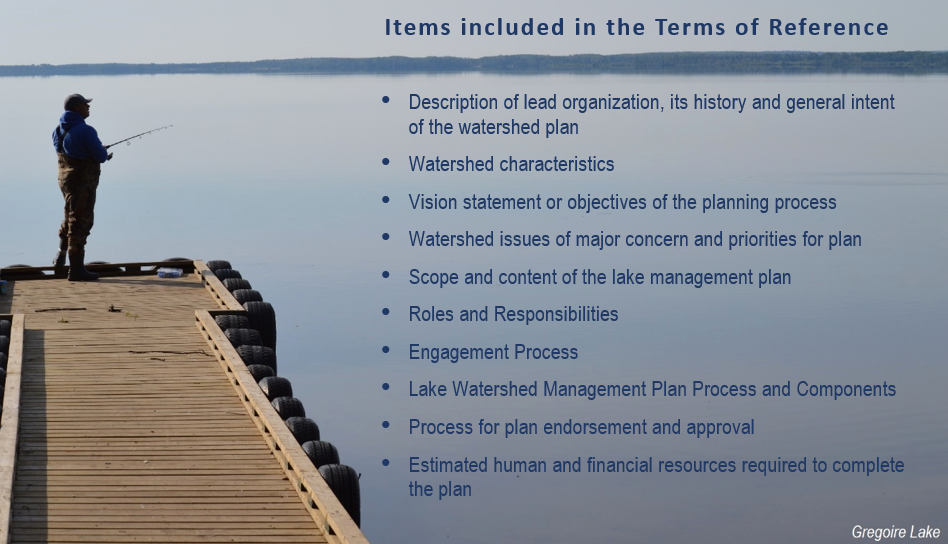
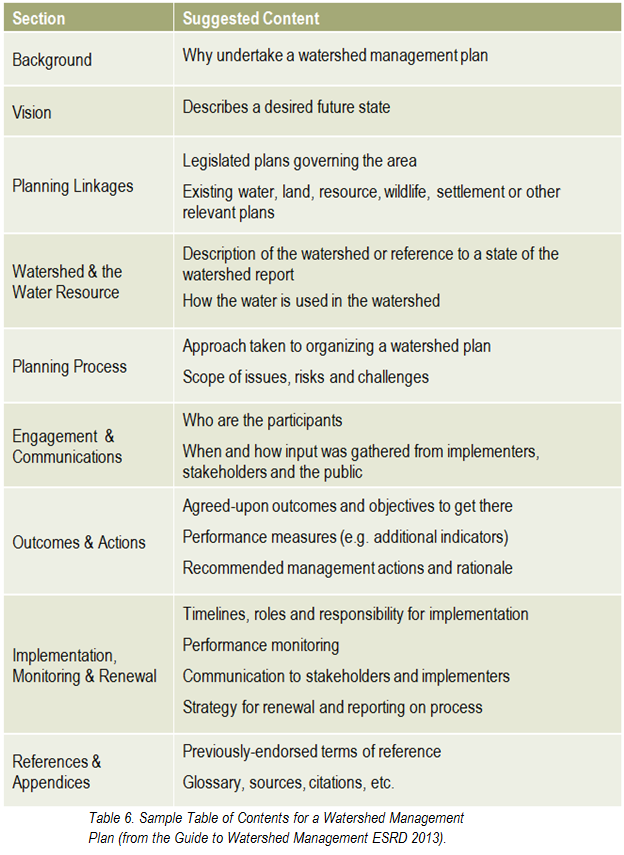
 What has the monitoring results of the plan and of the indicators shown? Is there a need to modify the plan? It is important that the lake watershed management plan does not just sit on a shelf. Information gaps should be addressed, action items need to be managed, completed, and evaluated to best address the needs of the lake. Always keep in mind the vision: if the actions taken are not bringing the lake closer to that vision, then the plan needs to be modified. Consider updating both the state of the watershed and the lake watershed management plans at regular intervals to make sure that the actions taken were achieving the desired outcomes and to evaluate what work still needs to be done.
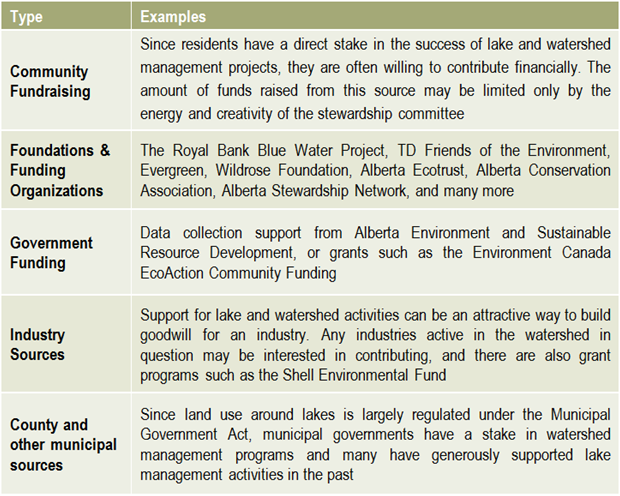 Once a plan has been approved by all affected sectors and officially endorsed and released by the steering committee, then implementation can begin in full. Action projects can be large and comprehensive, or made smaller by staging projects over time or into modules that can be tackled one at a time. Fundraising is an issue that many community groups may find intimidating, but experience with programs such as the Pine Lake Restoration Program (see
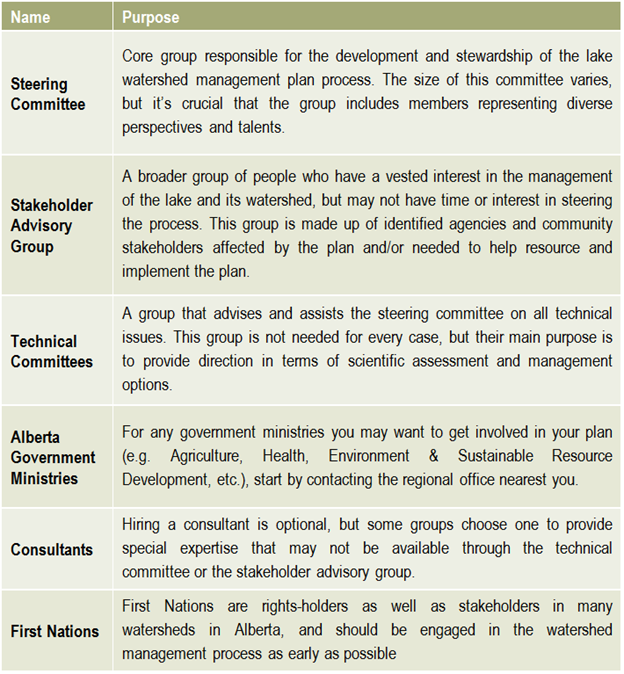
 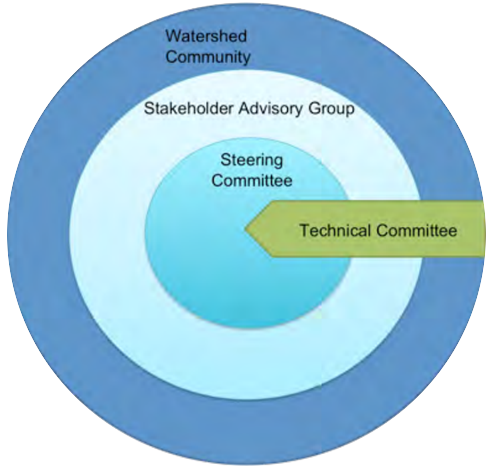 This graphic describes how the various committees and groups will work and interact together. The circle size depicts the approximate number of people involved, and the circles overlapping indicates that some individuals may reside in all of the circles and participate in multiple committees as part of the planning process. The technical committee is shown as an arrow, indicating that it is independent and has relatively few people, and yet it interacts with all of the groups. This graphic may look different depending on the lake and the people involved, and a detailed structure should be agreed upon and described in the plan’s Terms of Reference (Step 6).