
| Position | Name | Affiliation or Profession | Location |
|---|---|---|---|
| Chair | Mike Christensen | EPCOR | Edmonton |
| Vice-Chair | Kellie Nichiporik | Moose Lake Watershed Society | Bonnyville |
| Treasurer | Adam Norris | Environmental Steward | Little Smoky |
| Secretary | Breda Muldoon | Environmental Consultant | Edmonton |
| Director | Dörte Köster | Environmental Consultant | Edmonton |
| Director | Jay White | Aquality Environmental Consulting | Edmonton |
| Director | Stephanie Neufeld | EPCOR | Edmonton |
| Director | Brendan Ganton | Lakeland College | Vermillion |
| Director | Wendell Koning | Limnologist | Calgary |
| Director | Jennifer Kerr | Limnologist | Edmonton |
| Director | Devon Shouldice | GIS Specialist | Calgary |
| Director | Melissa Logan | Environmental Specialist | St. Albert |
| Director | Rosemarie Ferjuc | Wetland Ecologist | Calgary |
| Staff: Executive Director | Bradley Peter | ALMS | Edmonton |
| Staff: Program Manager | Brittany Onysyk | ALMS | Edmonton |
| Staff: Program Coordinator | Kurstyn Perrin | ALMS | Edmonton |
| Staff: Program Technician | Kirsten Letendre | ALMS | Edmonton |
Bradley Peter, Executive Director
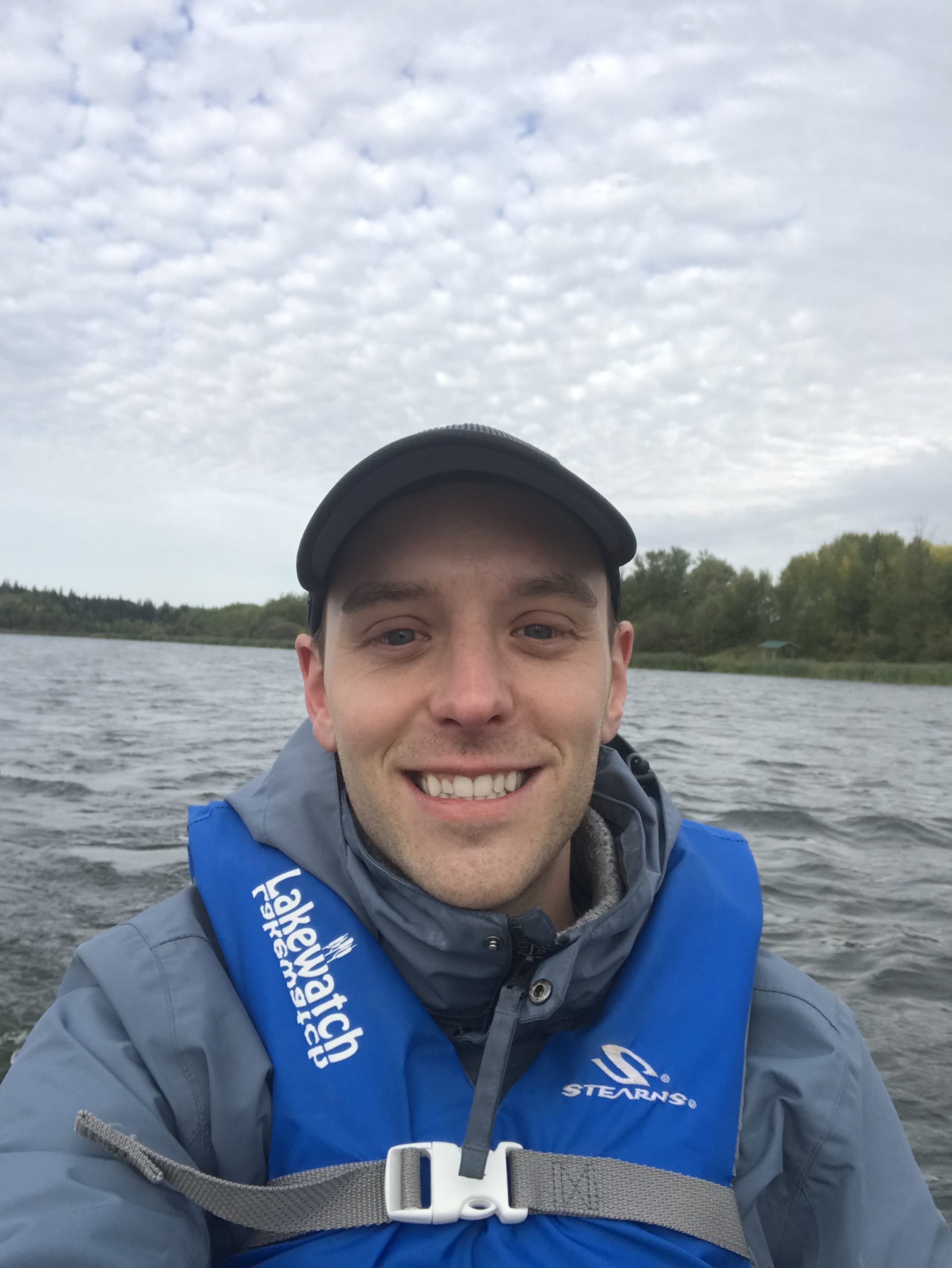 Bradley is the Executive Director of the Alberta Lake Management Society. Bradley completed a B.Sc. in Ecology in 2010 at the University of Alberta with a special interest in freshwater biology. Bradley has spent 12 years working on lakes and community based monitoring programs with a goal of improving our understanding and the management of lakes, reservoirs, and their watersheds. In his “spare” time Bradley loves to go bowling with friends.
Brittany Onysyk, Program Manager
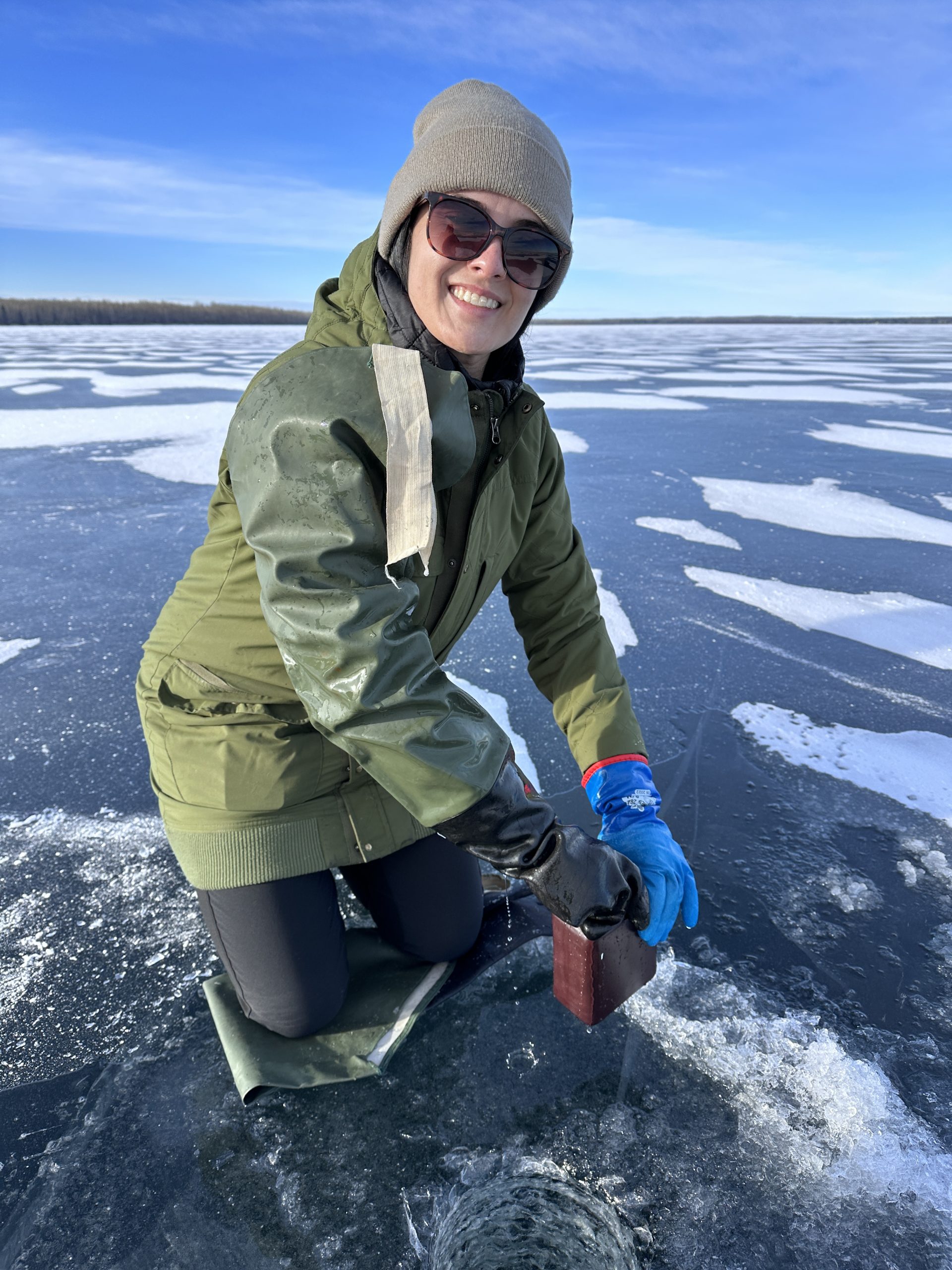 Growing up in a rural setting in Alberta, Brittany developed a great adoration of the environment. She has fond childhood memories camping around the province, and spent many summer days at lakes in the greater Edmonton region (especially Miquelon!). Having a deep appreciation for the environment and a desire to conserve it, Brittany graduated from the University of Alberta in 2018 with a B.Sc. in Environmental & Conservation Sciences, majoring in Land Reclamation. Brittany has held various field-based positions throughout the province, and is looking forward to expanding her knowledge on lake ecosystems as the Program Manager at ALMS. When she’s not out on the lake, you’ll find her out exploring with her dogs!
Kurstyn Perrin, Program Coordinator
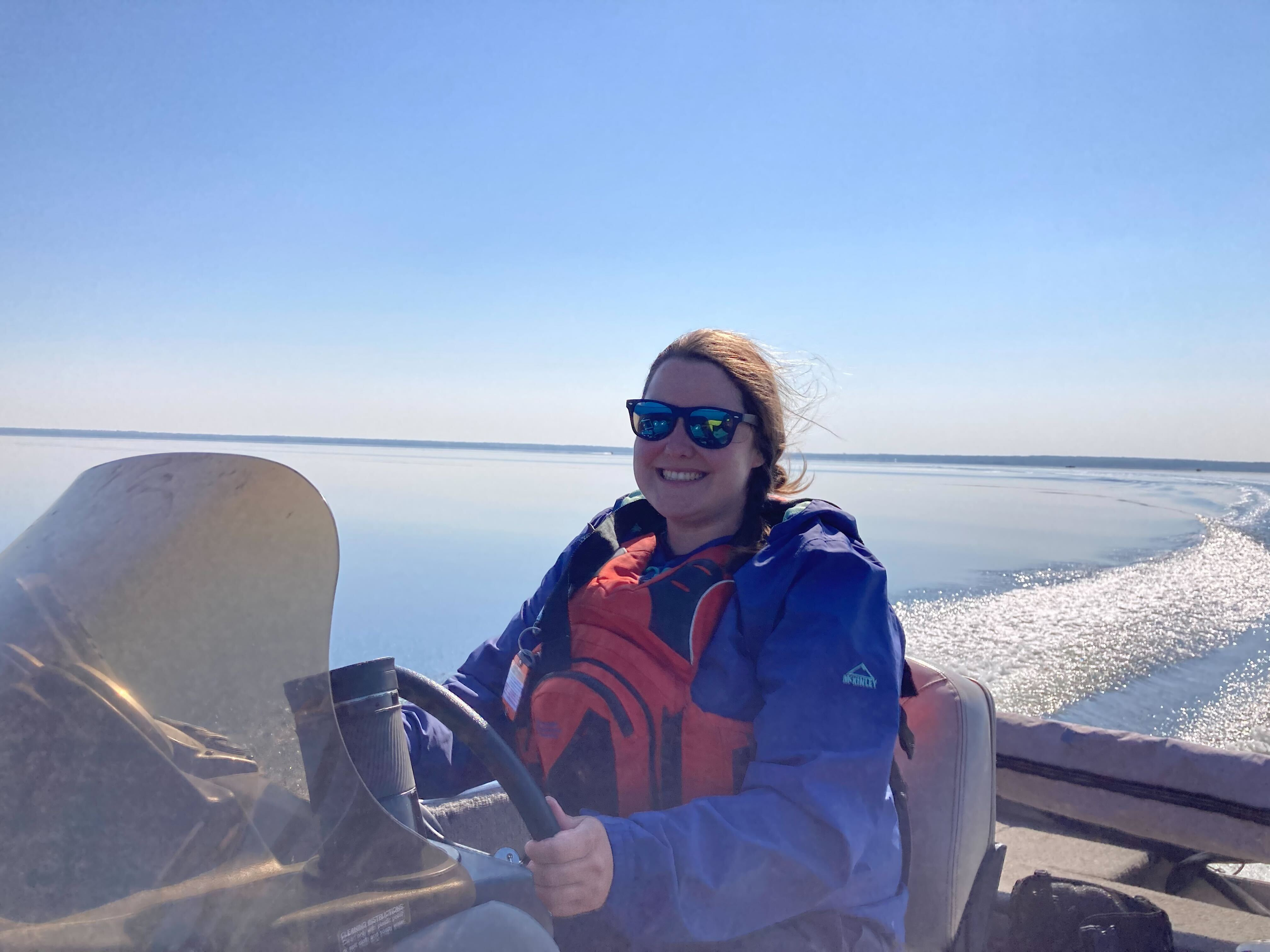 Kurstyn’s love for lakes began as a child, by spending many summers at her family cabin at Pigeon Lake and by camping a lot around Alberta. She graduated from the University of Alberta in 2015 with a B.Sc. in Environmental and Conservation Sciences, with a major in Conservation Biology. In winter 2022, she joined ALMS to support the winter programs and then became a LakeWatch Technician in the summer, and learned lots about freshwater and invasive species monitoring. You will find her in the new role as the Indigenous Community Based Monitoring (ICBM) Program Coordinator, leading our new water quality monitoring program working with Indigenous communities residing in the oil sands regions of Alberta. She is looking forward to continuing her work in aquatic ecosystem management and connecting with new communities across Alberta.
Kirsten Letendre, Satellite Technician
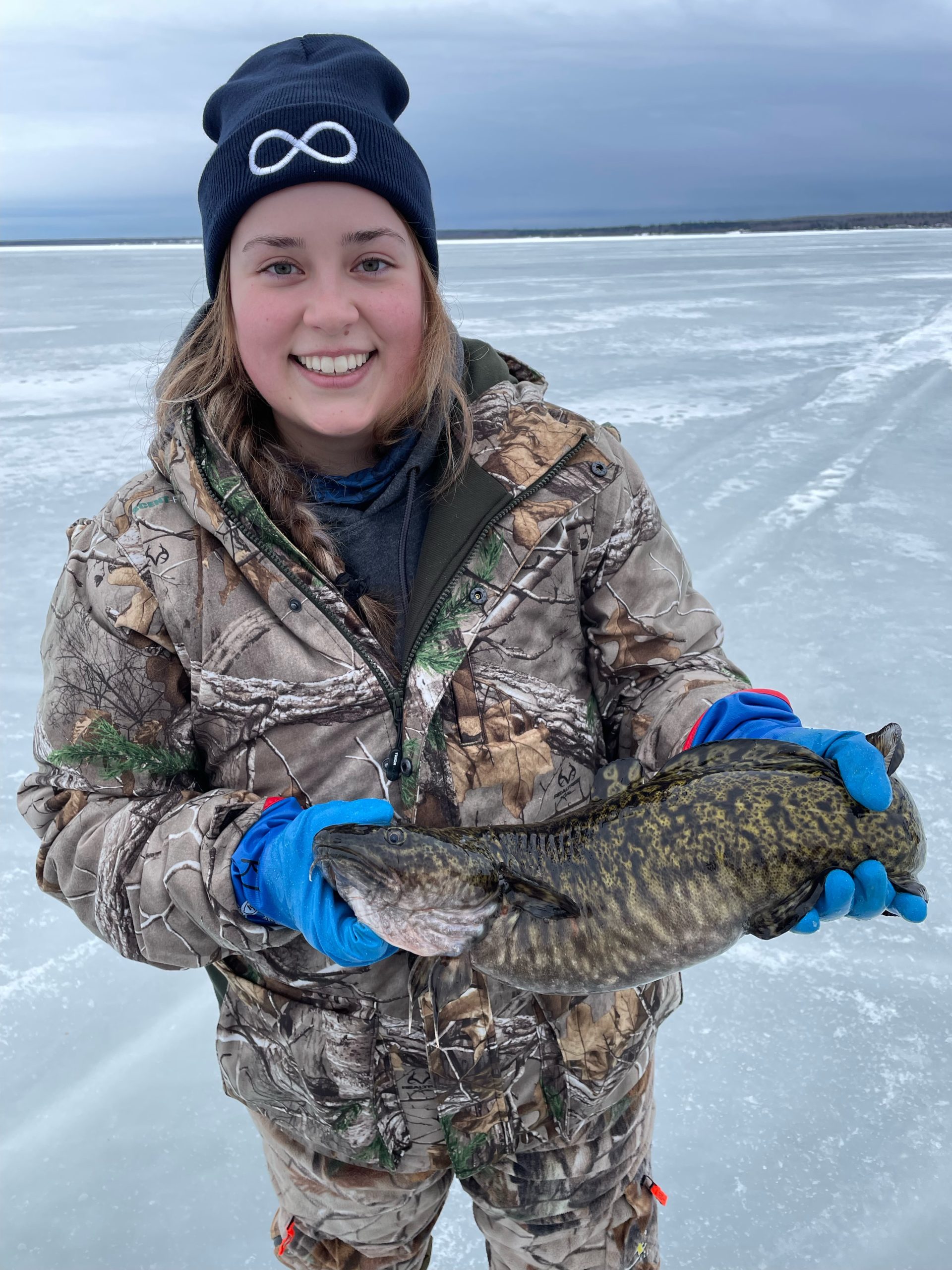 Kirsten’s passion for lakes started as a young girl spending her winters on McLeod Lake, ice fishing, and her summers on Pigeon Lake, camping, fishing and doing water sports. Her childhood passions continued into adulthood, and you can typically find Kirsten outside, near some body of water. She graduated from Grant MacEwan University in 2022 with a B.Sc., majoring in Biological Sciences. She has spent time working in a biology lab, working with orphaned and injured wildlife, and working on a fish monitoring study, looking at the health of fish in lakes across Alberta. Joining ALMS in fall 2022, Kirsten has supported winter & summer LakeKeepers programs, has explored the province while collecting data as a LakeWatch technician, and is now excited to move into the role of Satellite Technician this summer.
Jordyn Lajeunesse, LakeWatch Technician
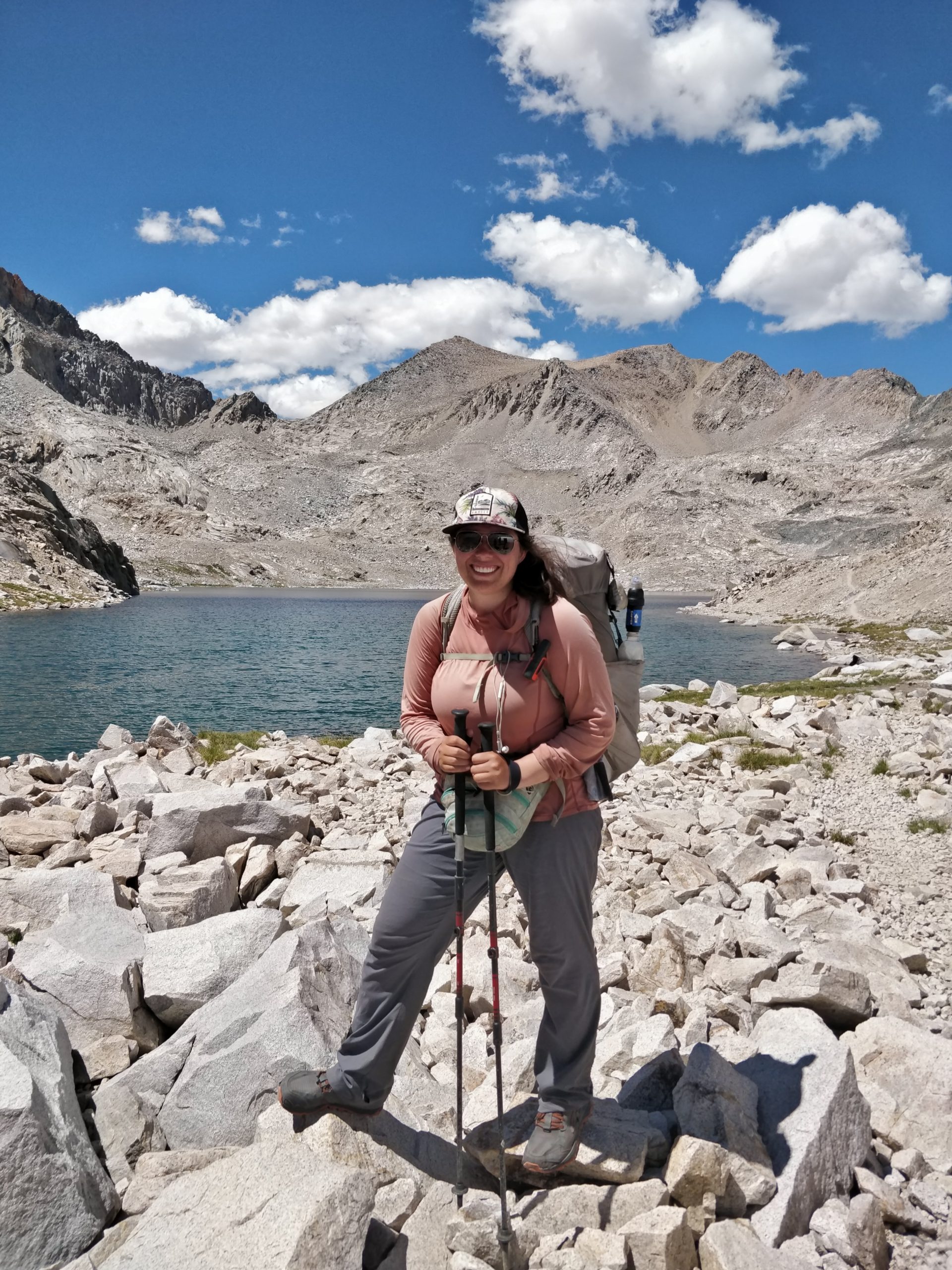 Jordyn’s passion for the outdoors developed while growing up in Saskatchewan, spending most of her time at the lakes. She was immersed in numerous activities, including camping, fishing, and other water recreational activities. She continues pursuing outdoor activities like backcountry camping, hiking, and exploring Alberta’s vast nature. She graduated from MacEwan University in 2023 with a B.Sc. majoring in Biology, and worked as a Satellite Technician for ALMS in the 2023 field season. She is excited to be back as a LakeWatch Technician this year and to spend time outside sampling and exploring more of Alberta’s beautiful lakes.
Katherine Cundict, LakeWatch Technician
 Katherine’s love for the outdoors began by spending time on Pigeon Lake with her family. She has recently graduated from the University of Alberta with a B.Sc. in Biology specializing in Integrative Physiology. In her free time, she enjoys playing ringette, hiking, cross stitching, and baking. This summer, she is looking forward to starting her first season as a LakeWatch technician and getting outside!
Kailyn Gibbons, Recreational Water Technician
 Kailyn’s love of water and lakes developed through years of swimming and camping at Alberta lakes. She continues to enjoy lakes while paddle boarding and exploring new areas to visit. When she’s not working, she can be found playing soccer, volleyball, and biking around her neighborhood! Kailyn recently finished her B.Sc. at the University of Alberta with a major in Chemistry and a minor in Biological Sciences. She was always passionate about science and doing hands-on activities, which has led her to exploring field and lab work in environmental sciences. She found water quality to be especially interesting through various courses and summer jobs and is very excited to be a part of the ALMS team. Kailyn is looking forward to spending the summer outside as a Recreational Water Technician and supporting healthy lake recreational use!
Blaire Oosterhuis, Recreational Water Technician

Born and raised in Alberta, Blaire has spent most of her years seeking outdoor adventures and opportunities. Her love for water stemmed from an early age, often enjoying activities such as boating, fishing, hiking, and camping at numerous lakes throughout the province. Having graduated from the University of Alberta this year with a B.Sc. in Conservation Biology, she is eager to enter a field she’s passionate about and expand her knowledge of aquatic science. In her role as a Recreational Water Technician, Blaire is looking forward to engaging with beach-goers, operators, and volunteers to recognize the importance of maintaining and monitoring freshwater ecosystems. She aims to help promote recreational water use that is safe, healthy, and fun!

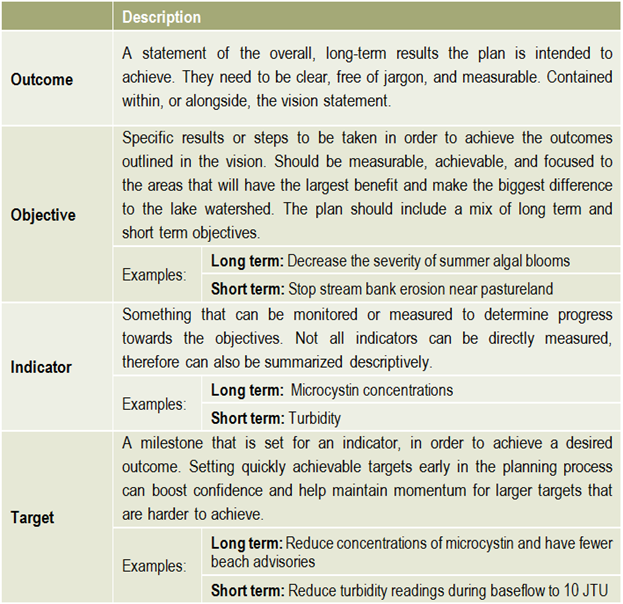
 The members of the steering committee will continue to play a strong role in facilitating and tracking implementation actions. This includes any actions they were responsible for, as well as tracking other committees and sector’s actions and progress made towards achieving the plan’s outcomes. Ongoing communication is essential to successful implementation and achieving outcomes, therefore a regular reporting mechanism could be set up in order to provide regular evaluation of the plan.
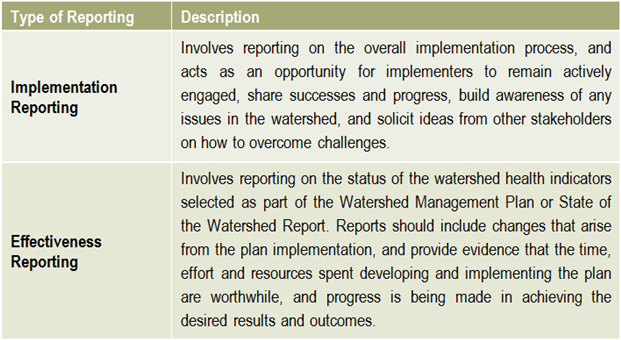 Reporting is an essential component of any watershed management planning and implementation process. There are two main types of reporting that should be shared with stakeholders on a regular basis: implementation reporting & effectiveness reporting.
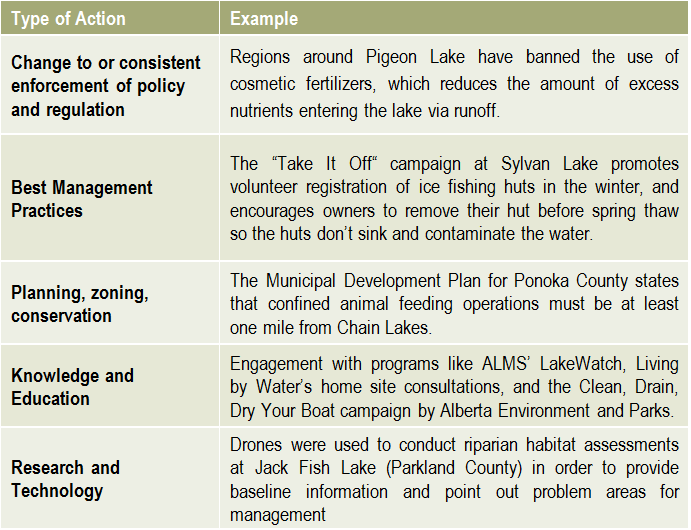 There is no limit to the number or types of lake management actions, but they typically fall into the categories on the right.
 Helpful resources
 The development of a lake watershed management plan provides the guidance needed to implement activities, but the plan cannot be static. Monitoring the performance of your management actions is essential to understanding whether your goals have been met, and whether further actions are needed. Monitoring and evaluating the implementation and effectiveness of a lake watershed management plan allows assessment of progress towards the goals and objectives of the plan, identification of problems and opportunities, and a collection of critical information required when performing a 5 or 10 year review of the plan.
 What has the monitoring results of the plan and of the indicators shown? Is there a need to modify the plan? It is important that the lake watershed management plan does not just sit on a shelf. Information gaps should be addressed, action items need to be managed, completed, and evaluated to best address the needs of the lake. Always keep in mind the vision: if the actions taken are not bringing the lake closer to that vision, then the plan needs to be modified. Consider updating both the state of the watershed and the lake watershed management plans at regular intervals to make sure that the actions taken were achieving the desired outcomes and to evaluate what work still needs to be done.
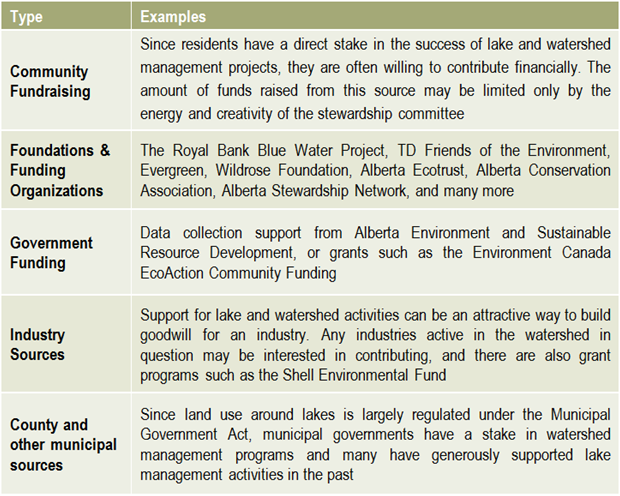 Once a plan has been approved by all affected sectors and officially endorsed and released by the steering committee, then implementation can begin in full. Action projects can be large and comprehensive, or made smaller by staging projects over time or into modules that can be tackled one at a time. Fundraising is an issue that many community groups may find intimidating, but experience with programs such as the Pine Lake Restoration Program (see
 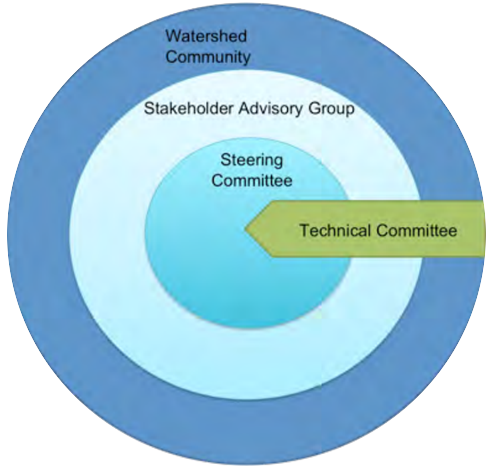 This graphic describes how the various committees and groups will work and interact together. The circle size depicts the approximate number of people involved, and the circles overlapping indicates that some individuals may reside in all of the circles and participate in multiple committees as part of the planning process. The technical committee is shown as an arrow, indicating that it is independent and has relatively few people, and yet it interacts with all of the groups. This graphic may look different depending on the lake and the people involved, and a detailed structure should be agreed upon and described in the plan’s Terms of Reference (Step 6).