The Water Conservation, Efficiency and Productivity initiative will begin the fourth phase of its work. ALMS has had a representative on the past three phases and is looking for someone to represent the Lake Environment Conservation sector on this working group.
The working group will develop a terms of reference to guide a project team in achieving the outcomes outlined in phase three of the Water Conservation, Efficiency and Productivity initiative. Extensive background information on this initiative is available on the AWC website (https://awchome.ca/Projects/
Expectations of Representative:
– Represent a particular stakeholder organization or sector, not personal perspectives;
– Come prepared for meetings, (i.e., reading pre-meeting material, completing homework assignments and being able to negotiate on behalf of their sector);
– Make constructive contributions that advance the team’s goals and objectives, and help others to do the same;
– Report regularly to their sector;
– Brief their sector’s Director regularly, including prior to the team’s report and recommendations being presented to the Board;
– As appropriate, participate in briefing ALMS;
– Liaise with their sector’s participants on the Board and other Council teams to maximize synergy, ensure coordination, and prevent duplication by keeping each other informed;
– Follow the rules and principles of consensus decision making.
Commitment:
– Approximately four months. Representatives may want to consider participating on the project team that will follow the working group.
– Two to three full-day meetings, with possibly some hours required between meetings to review and comment on materials (e.g. draft terms of reference).
If you are an ALMS member and interested in this project please contact Arin by June 18.

 The members of the steering committee will continue to play a strong role in facilitating and tracking implementation actions. This includes any actions they were responsible for, as well as tracking other committees and sector’s actions and progress made towards achieving the plan’s outcomes. Ongoing communication is essential to successful implementation and achieving outcomes, therefore a regular reporting mechanism could be set up in order to provide regular evaluation of the plan.
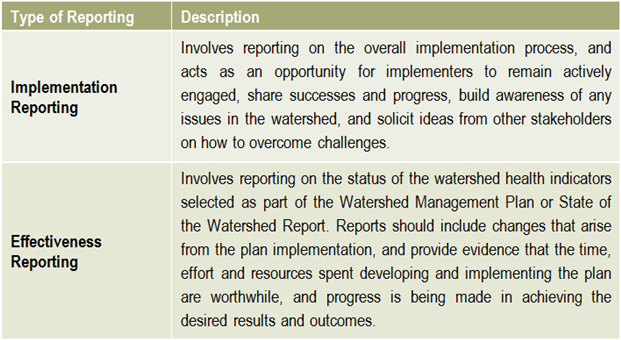 Reporting is an essential component of any watershed management planning and implementation process. There are two main types of reporting that should be shared with stakeholders on a regular basis: implementation reporting & effectiveness reporting.
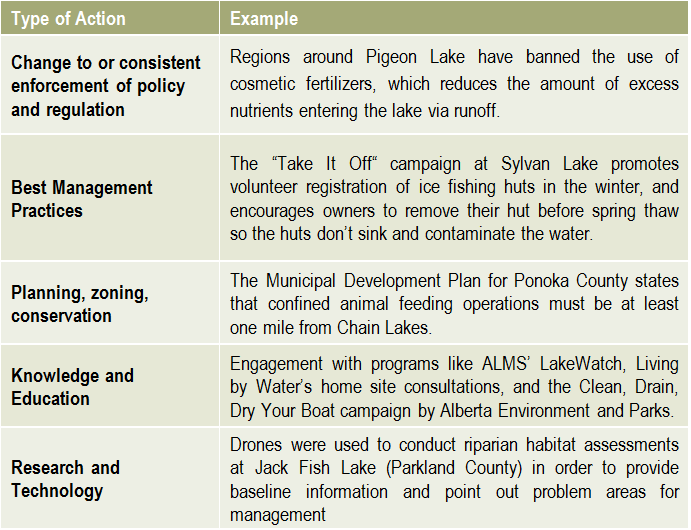 There is no limit to the number or types of lake management actions, but they typically fall into the categories on the right.
 Helpful resources
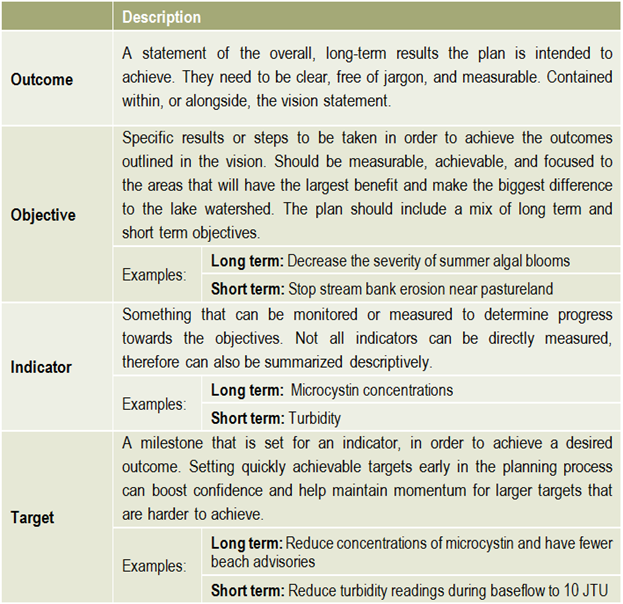
 The development of a lake watershed management plan provides the guidance needed to implement activities, but the plan cannot be static. Monitoring the performance of your management actions is essential to understanding whether your goals have been met, and whether further actions are needed. Monitoring and evaluating the implementation and effectiveness of a lake watershed management plan allows assessment of progress towards the goals and objectives of the plan, identification of problems and opportunities, and a collection of critical information required when performing a 5 or 10 year review of the plan.
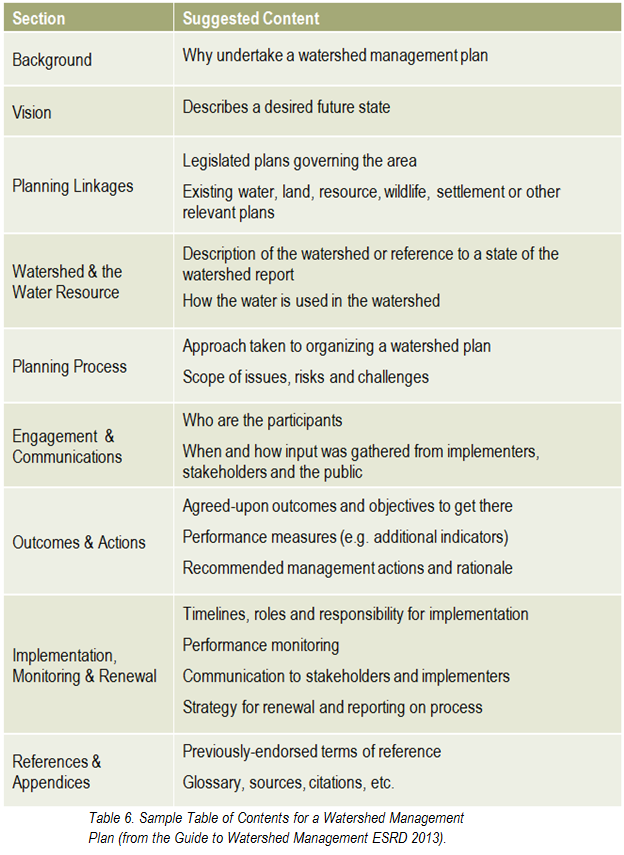
 What has the monitoring results of the plan and of the indicators shown? Is there a need to modify the plan? It is important that the lake watershed management plan does not just sit on a shelf. Information gaps should be addressed, action items need to be managed, completed, and evaluated to best address the needs of the lake. Always keep in mind the vision: if the actions taken are not bringing the lake closer to that vision, then the plan needs to be modified. Consider updating both the state of the watershed and the lake watershed management plans at regular intervals to make sure that the actions taken were achieving the desired outcomes and to evaluate what work still needs to be done.
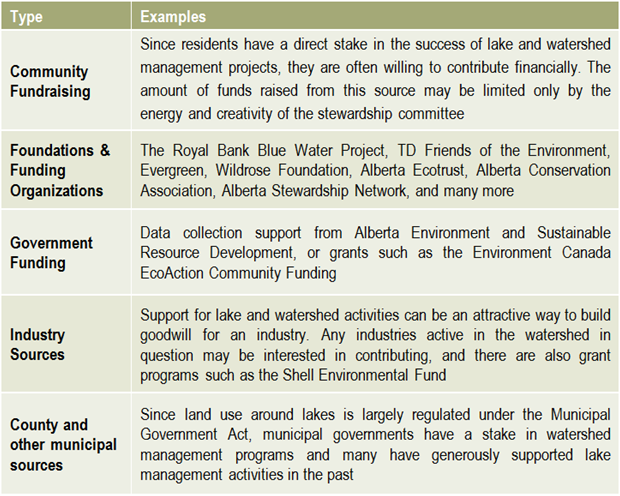 Once a plan has been approved by all affected sectors and officially endorsed and released by the steering committee, then implementation can begin in full. Action projects can be large and comprehensive, or made smaller by staging projects over time or into modules that can be tackled one at a time. Fundraising is an issue that many community groups may find intimidating, but experience with programs such as the Pine Lake Restoration Program (see
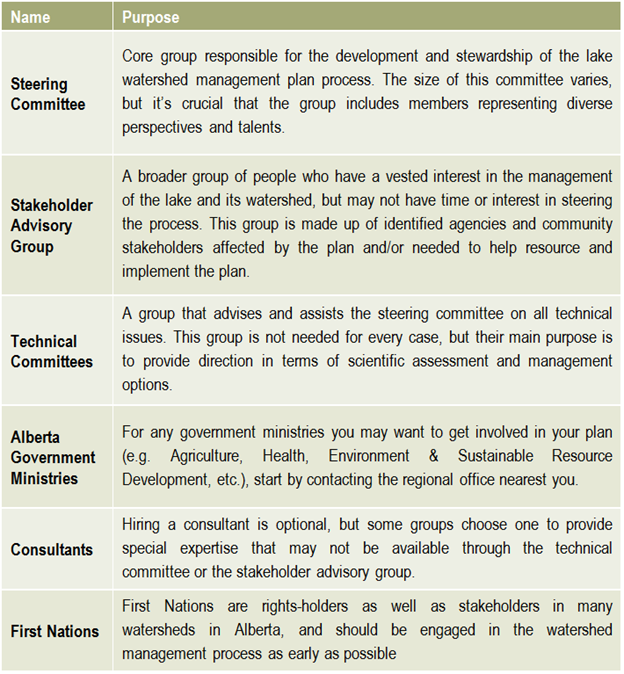
 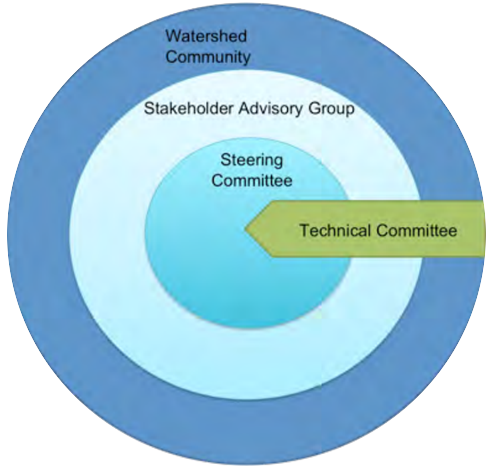 This graphic describes how the various committees and groups will work and interact together. The circle size depicts the approximate number of people involved, and the circles overlapping indicates that some individuals may reside in all of the circles and participate in multiple committees as part of the planning process. The technical committee is shown as an arrow, indicating that it is independent and has relatively few people, and yet it interacts with all of the groups. This graphic may look different depending on the lake and the people involved, and a detailed structure should be agreed upon and described in the plan’s Terms of Reference (Step 6).
Leave a Reply
You must be logged in to post a comment.